Black Friday 2026 will test whether UK retailers can still grow profitably in Europe
- Topic
- Tax compliance
- Source
- ChannelX
- Published
This summary was written by ShopDigest AI from ChannelX’s report, by Chris Dawson. Read the full story ↗
This year’s Black Friday will be the first peak trading season under the EU’s new customs rules for low-value ecommerce imports
Overview
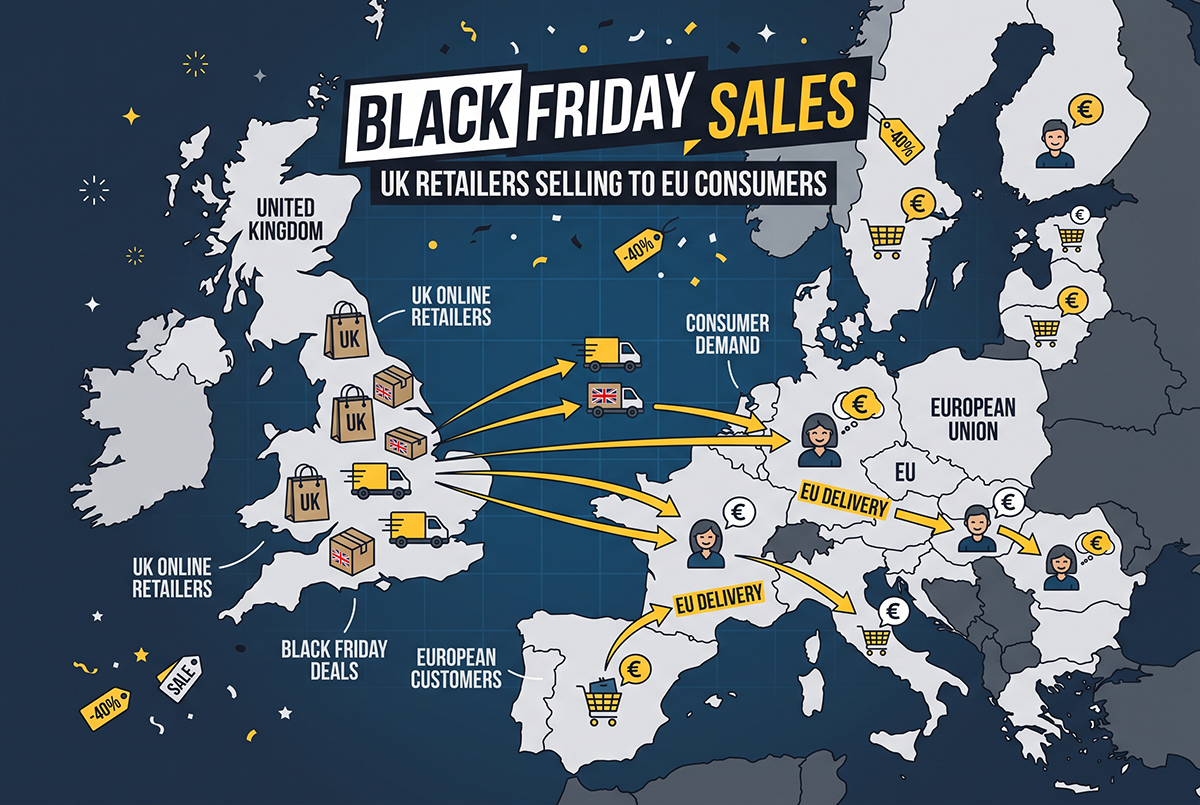
This year's Black Friday will be the first peak season under the EU's new customs rules for low-value ecommerce imports, adding a €3 charge per tariff line to UK retailers' cross-border orders. The article argues that profitability depends on managing basket complexity, discount thresholds, and returns costs, not just order volume.
Key Details
- EU charges €3 per tariff line on low-value imports; baskets with more categories incur more lines and higher costs.
- Discounts can push baskets below the €150 threshold, changing customs treatment and potentially increasing costs.
- Gift sets with multiple components may create multiple tariff lines, raising duty costs.
- From 1 November, Product Identifiers become mandatory on distance-sales customs declarations.
- Duties not prepaid can lead to carrier disbursement fees of €5–€15 and delivery delays during gifting season.
Why It Matters
Retailers must model the full landed cost—including customs, delivery, and returns—before peak to ensure cross-border growth remains profitable. The article emphasizes that sales growth and profitable growth are not the same, and that Q4 planning decisions made now will determine Black Friday's financial outcome.
Frequently asked questions
What is the €3 charge per tariff line under the EU's new customs rules?
Under the EU's new low-value import regime, every parcel entering the EU from outside the bloc is subject to a €3 charge per tariff line. A tariff line is determined by goods sharing the same tariff classification, description, and country of origin. Different categories can create separate lines, so a single parcel can incur multiple €3 charges.
How does Black Friday affect customs costs for UK retailers selling to the EU?
Black Friday baskets tend to contain more products and categories, which can increase the number of tariff lines per order. For example, an average of 1.6 tariff lines results in €4.80 duty, while 2.8 lines results in €8.40. This means customs costs rise during peak season, potentially reducing profit margins.
Can Black Friday discounts change the customs treatment of an order?
Yes. If a basket's value falls below the €150 threshold after a discount, it may move from normal tariff rules (potentially 0% duty for qualifying UK-origin goods) to the €3-per-line regime. Retailers should model planned discounts against the €150 threshold to understand the impact on costs.
Why are gift bundles a concern under the new EU customs rules?
Gift bundles with multiple components can create multiple tariff lines, each incurring a €3 charge. For example, a four-component set could result in €12 in duty. Retailers need to verify whether genuine retail sets can be classified under a single heading to avoid unexpected costs.
What are Product Identifiers and when do they become mandatory?
Product Identifiers are standardized codes (such as EAN) or merchant identifiers required on distance-sales customs declarations. They become mandatory from 1 November, just before Black Friday. Retailers should ensure their promotional range has correct HS codes and Product Identifiers to avoid operational issues.
What happens if duties are not prepaid on EU shipments?
If duties are not settled before delivery, the customer may face the €3 charge plus a carrier disbursement fee of €5–€15 before receiving the parcel. This can cause delays, especially during the gifting season, and damage the customer experience. Retailers should ensure shipments are delivered duty paid.