Intent Clusters Guide AI Product Discovery
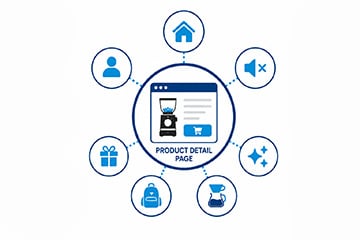
- Topic
- Analytics
- Source
- Practical Ecommerce
- Published
This summary was written by ShopDigest AI from Practical Ecommerce’s report, by Armando Roggio. Read the full story ↗
AI's growth in search and shopping adds precision to intent behaviors and opportunities.
Overview
The article explains how AI-powered search and shopping are changing product discovery, with longer, more contextual queries replacing short keyword searches. It introduces the concept of product intent clusters, where a product detail page is supported by multiple scenario-specific intent pages that help AI systems connect shoppers to products. The author argues that generative AI makes it feasible to create and maintain many such pages at scale.
Key Details
- Traditional search queries average about 4 words, while ChatGPT queries average 23 words.
- Product intent clusters center on a product detail page, supported by pages targeting specific shopper scenarios.
- Intent pages should explain the scenario, identify key product features, and show why the product fits the need.
- Pages should include Schema.org structured data and be optimized for AI bots as well as humans.
- Aim for dozens or more intent pages per product, generated and maintained with automation and genAI.
Why It Matters
Ecommerce marketers can influence AI-driven product recommendations by creating intent pages that address specific customer situations. This approach shifts SEO strategy from broad keywords to detailed, scenario-based content that AI systems can use to match products with shopper needs. The scalability of genAI makes this tactic practical for even niche use cases.
Frequently asked questions
What are product intent clusters?
Product intent clusters are a content strategy where a central product detail page is supported by multiple pages targeting specific shopping scenarios. Each supporting page addresses a particular customer need or use case, and together they help influence AI search and recommendation systems. The product detail page remains the core source of truth for purchase decisions.
How do AI queries differ from traditional search queries?
Traditional search queries are typically short, averaging about four words, while AI chat queries are much longer and more detailed, averaging around 23 words. For example, a shopper might ask a search engine for a 'small simple coffee grinder' but ask an AI for 'a quiet coffee grinder for a small apartment that works for pour-over and does not make a mess.' This longer context provides more opportunities for marketers to match content to specific needs.
Why should ecommerce marketers create intent pages?
Intent pages help brands appear in AI-generated recommendations when shoppers describe their needs in detail. By creating pages that address specific scenarios, such as 'best pour-over coffee grinders for tiny kitchens,' marketers can guide AI systems to connect their products with relevant queries. This can increase visibility and conversions.
How can generative AI help with intent page creation?
Generative AI can automate the research, writing, and maintenance of many intent pages, making it cost-effective to target narrow use cases. Marketers can feed structured customer feedback, such as support tickets and product reviews, into AI platforms to identify topics for these pages. This allows for scaling content production beyond what was previously feasible manually.