Native AI Search Is Only Half the Battle for E-Commerce Brands
- Topic
- SEO
- Source
- Ecommercetimes.com
- Published
This summary was written by ShopDigest AI from Ecommercetimes.com’s report, by publisher. Read the full story ↗
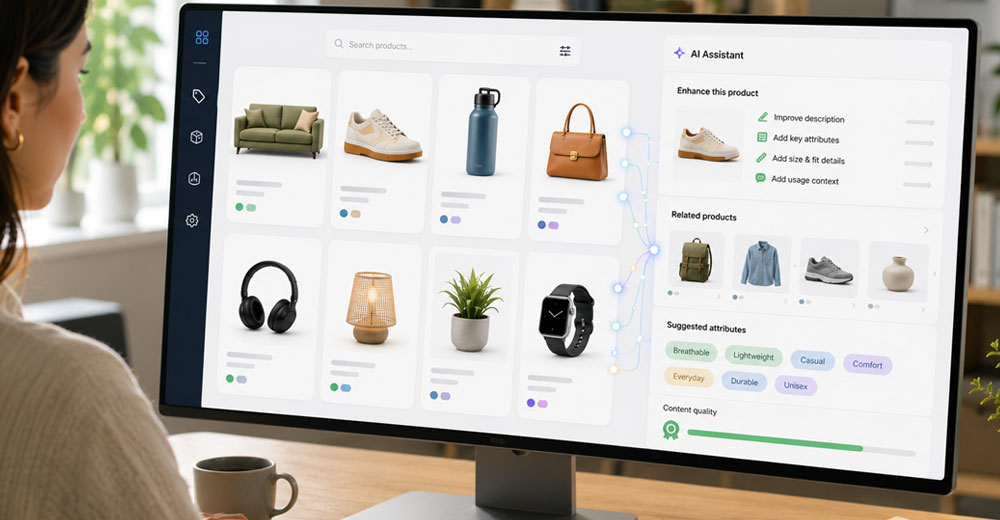
As semantic search becomes standard across e-commerce, experts say retailers should focus on richer product data, images, and metadata to improve AI-powered product discovery.
Overview
Shopify launched AI-powered semantic search in early 2024, built into its GraphQL Storefront API, and other platforms have followed with similar capabilities. Experts argue semantic search alone is not enough, and that richer product data, images, and metadata are what actually improve AI-powered product discovery.
Key Details
- Shopify's semantic search analyzes text and image data to match products to natural-language queries, interpreting intent, synonyms, and context via AI-driven vectors.
- Fast Simon CEO Zohar Gilad says search is only 15-20% of product discovery on brand sites, with roughly 80% coming from browsing collections, especially in apparel, footwear, and accessories.
- Fast Simon introduced hybrid search two years ago, combining semantic and keyword search to decide which products to show first for a given shopper and moment.
- Gilad says semantic search exposes poor product data, and that LLMs can enrich catalogs using descriptions, reviews, and social content signals.
- Rank Secure CEO Baruch Labunski says shoppers now use natural-language queries like 'running shoes for flat feet' instead of keywords.
- GoGoChimp founder Chris McCarron distinguishes on-store semantic search from off-store AI search, a distinction he says retailers often overlook.
Why It Matters
AI raises the cost of poor product data, so merchants with weak taxonomy, metadata, and variant descriptions will struggle even with advanced semantic engines. Enriching product data can reduce search time, improve purchase likelihood, and increase revenue, while conversational AI shopping assistants make discovery a multi-surface, multi-turn experience.
Frequently asked questions
What is Shopify's AI-powered semantic search?
Shopify launched semantic search in early 2024, built directly into its GraphQL Storefront API via the search and predictive-search queries. It analyzes text and image data to match products to customer search terms, interpreting natural language intent, synonyms, and context using AI-driven vectors.
Why is semantic search alone not enough for ecommerce brands?
Fast Simon CEO Zohar Gilad says semantic understanding alone isn't enough because product discovery is an application layer where every merchant has different goals and merchandising strategies. On brand websites, search is typically only 15-20% of product discovery, with about 80% coming from browsing collections.
How does semantic search change product discovery on brand websites?
Product discovery has become a multi-surface experience rather than a single search box, according to Gilad. Shoppers may browse a collection, run a short semantic search, ask a follow-up question, and eventually have a multi-turn conversation with an AI shopping assistant.
Why does better product data matter for AI search?
Gilad argues semantic search exposes poor product data, and that if taxonomy, metadata, and variant descriptions lack detail, even the smartest semantic engine struggles. LLMs can automate enrichment using product descriptions, reviews, and social content, adding concepts like '70s vibe' or 'quiet luxury' that never appeared in the original catalog.
How do natural-language queries change ecommerce search behavior?
Rank Secure CEO Baruch Labunski says shoppers now use natural-language queries such as 'running shoes for flat feet' and 'dining tables for small apartments' instead of entering keywords. Search engines can understand the intent and context of those phrases, which can reduce search time and improve purchase likelihood.
What are the two types of semantic search in ecommerce?
GoGoChimp founder Chris McCarron says semantic search in ecommerce has two types: on-store semantic search and off-store AI search. He says retailers often overlook this distinction, costing themselves time and money.