AI Fraud Is Making One-Time Identity Checks Less Reliable

- Topic
- Fraud prevention
- Source
- Ecommercetimes.com
- Published
This summary was written by ShopDigest AI from Ecommercetimes.com’s report, by publisher. Read the full story ↗
AI-assisted document manipulation and region-specific fraud tactics are forcing e-commerce companies to rethink how they verify customers throughout the digital journey.
Overview
AI-assisted document manipulation is making one-time identity checks less reliable for ecommerce companies. Microblink's research found attackers increasingly alter legitimate identity documents rather than fabricate fakes, with portrait forgery accounting for roughly 60% of document fraud failures in the U.S. and nearly 65% in Canada. The firm argues verification must draw on multiple signals across the customer journey instead of a single onboarding check.
Key Details
- Portrait forgery was the most common attack in North America; screen presentation attacks dominated Europe; physical replicas were more frequent in Latin America, the Middle East, and Africa.
- Microblink's verification combines document authentication, biometric facial matching, liveness detection, payment card fraud signals, and automated risk scoring.
- The 'sophistication paradox' means stronger physical ID security pushes fraudsters toward precise AI editing of real credentials rather than total fabrication.
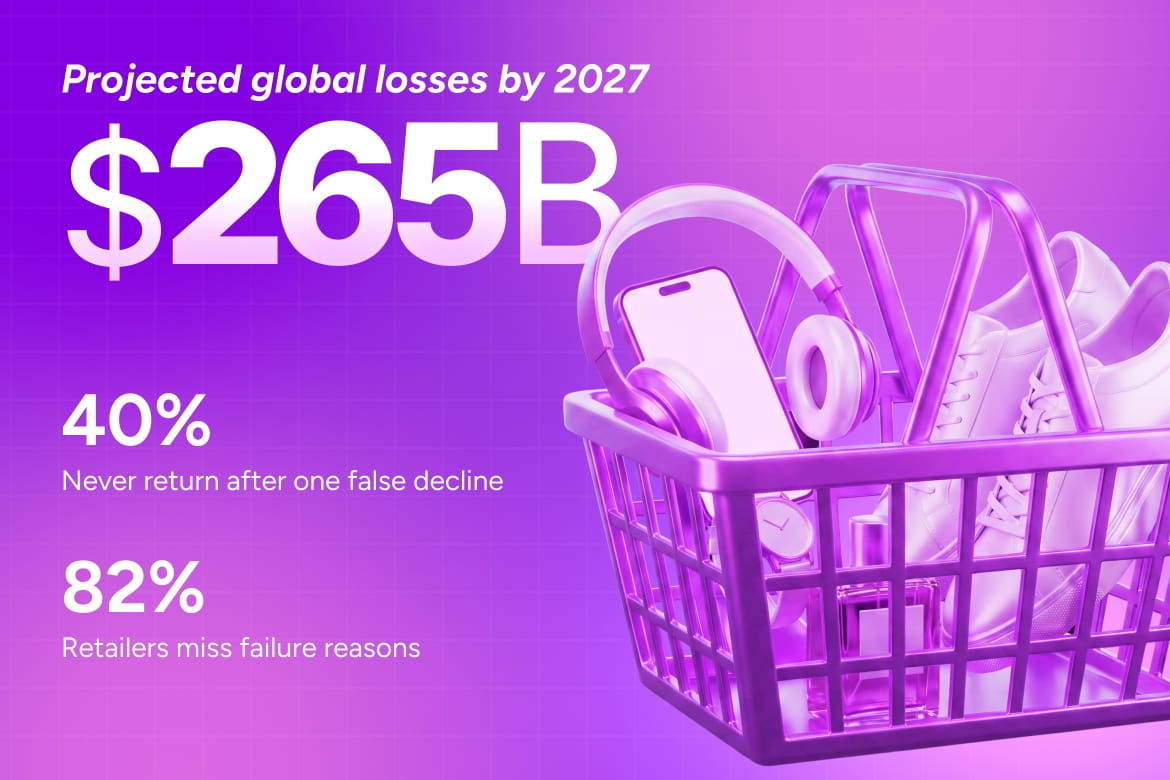
- Sift's Q2 2026 Digital Trust Index found the average cost of a false positive in digital commerce reached $496 in Q1 2026.
- Fraud rings are harder to detect when accounts, devices, payment instruments, and transactions are examined separately.
Why It Matters
A legitimate verification at onboarding does not guarantee an account or transaction stays trustworthy later. Accounts can be compromised after onboarding, and synthetic identities can accumulate history to appear increasingly legitimate. Continuous risk assessment using device, behavioral, and transaction signals can flag changes without repeatedly asking customers to re-verify.
Frequently asked questions
Why are one-time identity checks becoming less reliable for ecommerce fraud prevention?
AI has made identity fraud cheaper, faster, and easier to scale, letting attackers alter legitimate documents instead of building fakes from scratch. A single verification at onboarding does not guarantee an account or transaction remains trustworthy later. Accounts can be compromised after onboarding, and synthetic identities can accumulate enough history to appear legitimate.
What is portrait forgery in identity document fraud?
Portrait forgery is when an attacker replaces or manipulates the photograph on an otherwise legitimate identity document. Microblink found it accounted for roughly 60% of document fraud failures observed in the U.S. and nearly 65% in Canada. It is more prevalent in North America than other attack types.
How do fraud attack methods differ by region?
Microblink's analysis of millions of identity interactions in the first half of 2026 found portrait forgery was more prevalent in North America. Screen presentation attacks were more common in Europe, while physical replicas were more frequent in Latin America, the Middle East, and Africa. The pattern suggests fraud operators adapt methods to local documents, infrastructure, and verification controls.
What is the sophistication paradox in identity fraud?
Microblink CEO Hartley Thompson III described the sophistication paradox as stronger physical security features on government IDs driving fraudsters toward precise AI-based editing of legitimate credentials rather than total fabrication. The more secure legitimate documents become, the more incentive there is to manipulate a real document. This is a different problem from detecting a crude counterfeit.
What signals should identity verification systems combine?
Microblink's approach combines document authentication, biometric facial matching, liveness detection, payment card fraud signals, and automated risk scoring. Its process scans government IDs, checks visual security features and barcodes, confirms a live user matches the portrait, and generates instant risk decisions. Sift recommends connecting identity, payment, behavioral, device, and outcome data to identify coordinated attacks.
What is the cost of a false positive in digital commerce fraud controls?
Sift's Q2 2026 Digital Trust Index found the average cost of a false positive in digital commerce reached $496 in the first quarter of 2026. This underscores the potential cost of fraud controls that mistakenly block legitimate transactions. It highlights the need to balance blocking bad actors with letting real customers pass.
How can ecommerce companies detect new fraud attack patterns?
Thompson urged organizations to watch not only for increases in fraud volume but also for changes in the types of attacks they encounter. A sudden concentration of a particular document attack, a new manipulation technique, or activity that looks different from historical patterns can signal attackers scaling something that works. Barcode anomalies, where encoded information does not match what is visibly displayed, are one example.