The $265 billion mistake: How e-commerce turns away its customers with false declines
- Topic
- Payments
- Source
- Ecommerce Germany
- Published
This summary was written by ShopDigest AI from Ecommerce Germany’s report, by Editorial Team. Read the full story ↗
False decline in ecommerce now cost more than global fraud. See why legitimate payments get refused - and the fixes that lift approval rates.
Overview
False declines — legitimate payments rejected by mistake — now cost more than global fraud, with $81 billion lost in the US alone in 2023. The article explains why good payments get refused and how merchants can lift approval rates through better data and direct acquiring.
Key Details
- US false declines: $157 billion at risk in 2023, $81 billion permanently lost.
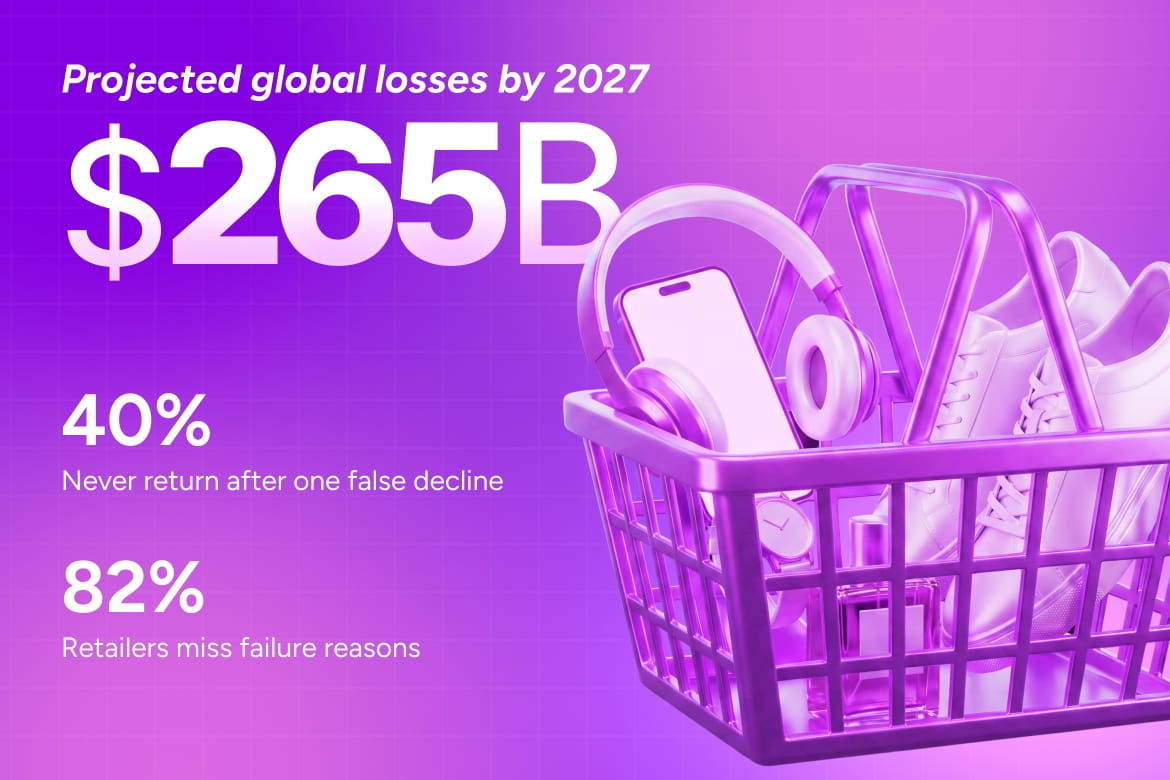
- Global false-decline rate averages 1.51% of e-commerce sales, projected to reach $265 billion by 2027.
- 40% of customers won't buy again after a single false decline.
- 82% of online retailers can't identify causes of failed payments.
- Fraud teams could drive a 1% top-line increase by approving more good transactions.
Why It Matters
False declines are invisible costs that erode revenue and customer trust. Merchants can recover lost sales by using real-time dispute data to refine fraud models and by working with direct acquirers to reduce risk-stacking.
Frequently asked questions
What is a false decline in e-commerce?
A false decline is when a legitimate payment is rejected by an issuing bank or fraud filter that mistakes a real buyer for a criminal. It happens at checkout, causing the customer to abandon the purchase even though they had valid payment.
How much do false declines cost e-commerce merchants?
In the US alone, $157 billion in sales were at risk from false declines in 2023, with $81 billion permanently lost. Globally, losses are projected to reach $265 billion by 2027, far exceeding the ~$48 billion in actual fraud losses in 2023.
Why do legitimate payments get falsely declined?
Three main forces drive false declines: over-correction from risk teams tightening rules after chargebacks, cross-border friction where international cards are treated as higher risk, and legacy logic that auto-declines on mismatches like billing-shipping address differences.
How can merchants reduce false declines?
Merchants can reduce false declines by becoming a direct acquirer to avoid data loss from intermediaries, using risk-based authentication like 3DS2 to avoid hard challenges, and leveraging real-time dispute alerts to sharpen fraud models. These fixes can increase approval rates and recover lost revenue.
What is the impact of false declines on customer loyalty?
A single false decline can cause 40% of customers to never buy from the merchant again, according to Ethoca. The rejection feels like an accusation, damaging trust and potentially erasing the customer's entire lifetime value.