3D Printed Products: Is Skipping Traditional Tooling Worth The Risk?
- Topic
- Product safety
- Source
- Ecommerce Fastlane
- Published
This summary was written by ShopDigest AI from Ecommerce Fastlane’s report, by Steve Hutt. Read the full story ↗
3D printing lets DTC brands launch a new product without the tooling cost of injection molding, typically five to six figures, which makes it a strong fit for
Overview
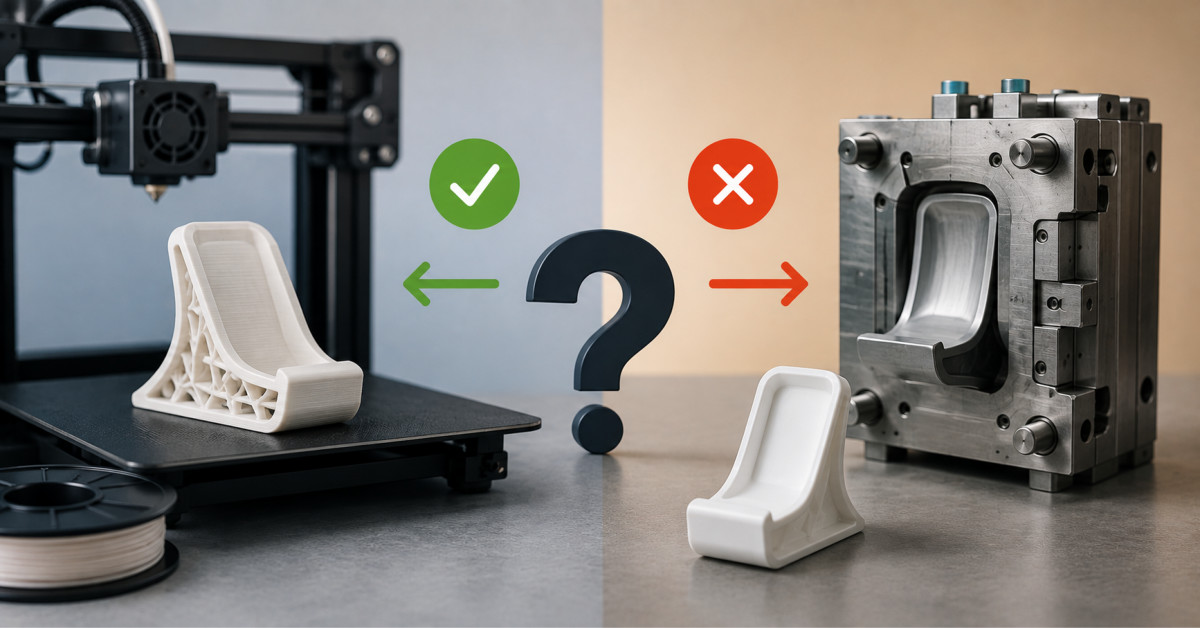
The article explains how 3D printing lets DTC brands launch new products without the high upfront cost of injection molding tooling, which typically runs five to six figures. It provides a decision framework for when additive manufacturing is cost-effective for first production runs and when traditional manufacturing becomes more economical at volume.
Key Details
- 3D printing eliminates tooling costs, making it ideal for testing unproven designs with low order volumes (under a few thousand units).
- Nexbie's Cloud slipper demonstrates how a single printed structure can replace multiple components, reducing assembly and failure points.
- Once demand is proven, most brands switch to traditional manufacturing for better unit economics at scale.
- Protolabs Network's 2024 report found 82% of engineers reported cost savings from 3D printing, and 47% cited lead time as the primary reason.
Why It Matters
For DTC founders between $10K and $500K in revenue, 3D printing offers a low-risk way to test new product categories without committing to bulk inventory or expensive molds. The trade-off is a higher per-unit cost, but that is acceptable when validating demand before scaling.