The WooCommerce Migration Wave Is Here. Most Brands Are Optimizing the Wrong Half of It.
- Topic
- WooCommerce
- Source
- Ecommerce Fastlane
- Published
This summary was written by ShopDigest AI from Ecommerce Fastlane’s report, by Steve Hutt. Read the full story ↗
A WooCommerce to Shopify migration is only successful when it pairs clean data transfer with deliberate conversion‑rate optimization, turning the platform
Overview
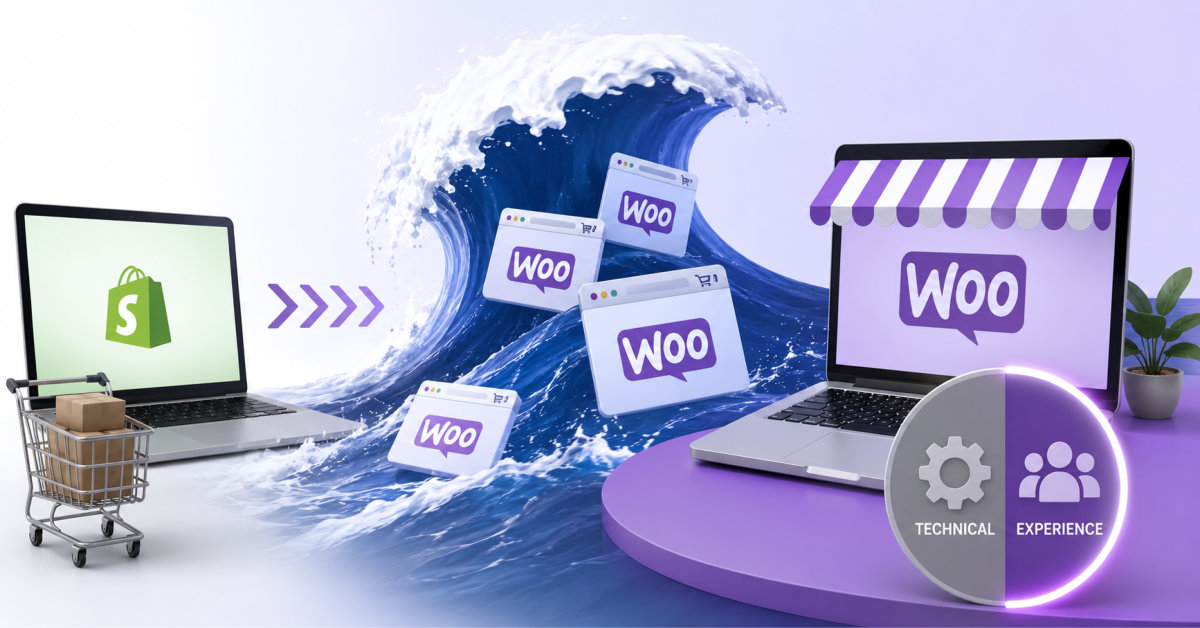
A WooCommerce to Shopify migration succeeds only when paired with deliberate conversion-rate optimization, not just clean data transfer. The article argues that most brands treat the move as a data-transfer project, missing the chance to fix existing checkout friction. It emphasizes measuring success by revenue continuity and lift, not just a completed cutover.
Key Details
- WooCommerce powers 33–39% of all online stores by count, but Shopify leads the top 1M high-traffic sites at ~29% vs WooCommerce's ~18%.
- Catalog, customer, and order data move cleanly, but passwords never transfer and URL structures change, risking organic traffic loss.
- Checkout customizations built with WooCommerce plugins must be rebuilt with intent in Shopify Functions and checkout extensibility.
- Cart abandonment averages ~70% industry-wide, with mobile even higher; a clean migration alone won't fix that.
Why It Matters
Treating migration as a conversion project with a migration attached can make the move pay for itself. Brands that skip CRO work end up with a technically successful migration but a checkout that converts worse than before.